I grew up in a village in post-Soviet Ukraine. In the 1990s, if you wanted to improve your English there, your options were limited in ways that are hard to explain now.
I wrote about how that started in another post. This one is about what came next.
We shared a teacher with another school. She was busy, and private lessons weren’t really a thing yet. The Soviet Union was gone, but the idea that charging money for tutoring was somehow questionable hadn’t disappeared with it. The only recordings we had were from a vinyl player, based on a textbook so dull I still remember the specific feeling of having to open it.
If you wanted something outside the classroom, you went to the library and hoped.
The book I found by accident
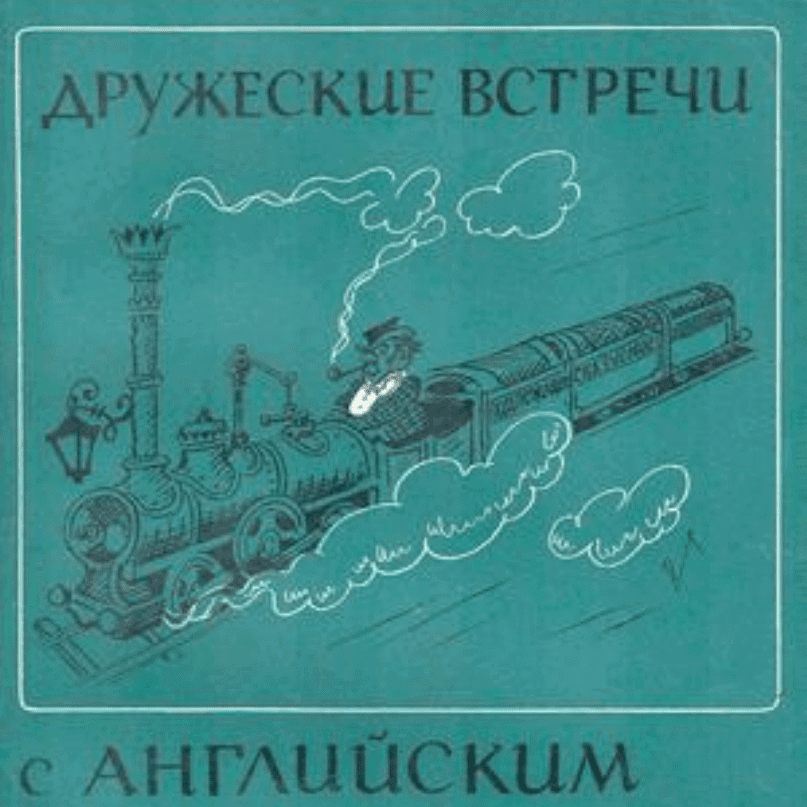
I was lucky. On one of those trips I found a single copy of Maria Kolpakchi’s book, “Friendly Meetings with the English Language.” It was published in 1975, years before I was born. The cover was worn. I almost put it back.
I didn’t.
Some examples inside were from another era entirely: Lenin, collective farms, the Party. But most of the book was something I hadn’t encountered before. It was written as stories, not rules. And those stories did something the textbook never managed: they showed me how English actually worked.
I finally understood what articles were for. I saw the difference between Past Simple and Present Perfect not as two boxes to memorize, but as two different ways of relating to time. I noticed things I’d been reading past for years.
I started paying attention differently. Not to rules, but to patterns. Not to what was correct, but to what the language was doing.
The week I started thinking in English
Around the same time, I found two shelves of graded readers in my teacher’s bookcase. Graded readers are books adapted for lower levels. She let me take one. I don’t remember the title now. It was a paperback, white and blue, for seventh-grade students.
I finished it in a week.
Somewhere in the middle of that week, I was walking home from my grandmother’s and a complete English sentence appeared in my head. Not translated. Just there, in English, as if it had always lived there.
I stopped in the middle of the street and laughed.
A little later, my mother told me I’d been speaking English in my sleep.
What actually changed
I didn’t have a teacher pushing me. I didn’t have speaking practice. My pronunciation was bad for years afterward. But I never had much trouble finding words or putting sentences together, because by the time I needed to speak, the language was already somewhere inside me.
Not from studying it. From spending enough time inside it that it started to feel like somewhere I’d been before.
The two things that mattered weren’t method or discipline. They were a book that showed me how English thought, and enough reading that my brain started doing the same thing on its own.
Neither of those things was fast. But both of them were real.
If you want more like this — short notes on English, language, and what actually helps — you can sign up for my newsletter
Sound More Like Yourself in English