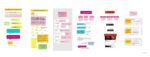
If you’ve ever wondered about the difference between was supposed to and had to — you’re not alone. Today I want to show you how to talk about past plans that didn’t happen in English, without sounding like you’re translating directly from Ukrainian.
Here’s another post about small, slightly annoying corners of English that seem to trip up Ukrainian learners again and again, like the one about called vs named.
Ideas for these posts come straight out of my lessons. The same little problems keep appearing when my students speak: the same phrases, the same structures, the same moments where they pause and think, wait… is this right?
One of those tricky spots is:
“мала щось зробити (але не зробила)”
The (wrong) sentence I hear all the time
I hear this mix‑up constantly. A student is telling a story about something that happened yesterday or last week. Everything sounds natural, and then they say:
❌ I should call her yesterday.
Every time I hear it, I have the same little reaction in my head: ah, there it is again.
The logic makes sense if you’re thinking in Ukrainian. You can almost see how the sentence was built step by step.
But in English, it lands a bit sideways.
Native speakers don’t use should like that when talking about past plans.
What English uses instead: was supposed to
was supposed to
Examples
I was supposed to call her yesterday evening, but I forgot.
We were supposed to go there in summer, but we couldn’t afford it.
If you want a Ukrainian “feeling” for it:
was supposed to = повинен був / повинна була
It carries ideas like:
- that was the plan
- that was the expectation
- that was the arrangement
I was supposed to call her.
→ That was the plan. Whether I actually did it is another story.
We were supposed to meet at 6.
→ That’s what we agreed on.
Very often, not always but often, this structure quietly hints that something didn’t happen. You’ll often hear “but” right after it:
Yeah, I know, I was supposed to study. (but I didn’t do that, so you don’t even need to add “but I fell asleep”)
Which feels very human. Plans exist. Reality shows up and ruins them.
Avoid this common mistake
❌ I should call her yesterday.
✅ I was supposed to call her yesterday.
The second sentence works because it shows there was an expectation, even if the action never happened.
What about had to?
At first, it seems similar. But the meaning shifts in an important way.
When you say “I had to …”, you’re talking about necessity. Something was required, and it was done. There wasn’t really a choice.
had to = довелося / був змушений / була змушена
Examples:
I had to call her.
→ It was necessary, so I did it.
We had to leave early.
→ There was no choice.
When someone says had to, we usually assume the action actually happened.
The key difference
I was supposed to call her yesterday.
→ That was the plan. Whether I actually did it isn’t clear, but it is very likely that I did not.
I had to call her yesterday.
→ It was necessary, so I called her.
One talks about expectation.
The other talks about what happened.
Quick practice
I ___ finish the report yesterday, but I ran out of time.
We ___ leave early because the office was closing.
She ___ meet me at 7, but she never showed up.
I ___ call my doctor yesterday, but I completely forgot.
They ___ cancel the meeting because the manager was sick.
Answer key:
was supposed to
had to
was supposed to
was supposed to
had to
Sound More Like Yourself in English