Most people at B1–B2 level assume that learning English vocabulary is straightforward: find new words, study them, use them. They know a lot of words. They’ve studied. They recognize most of what they read.
But when they speak, the same basic words come out every time — and the more precise ones stay somewhere in the back of their head, not quite reachable.
The issue isn’t the size of your vocabulary. It’s how it was built.
Here are three vocabulary learning mistakes that explain why the right words don’t show up when you need them.
Mistake 1: Learning words without context
Olena finds a list of phrasal verbs online. She studies them. A week later, most are gone.
It’s not a memory problem. It’s a context problem.
When you learn a word from a list, your brain stores it as an isolated label. It knows the word exists. It doesn’t know when to reach for it, what comes before or after it, or what kind of situation calls for it. So when that situation arrives, the word stays put.
Context is what connects a word to use. Not the definition — the situation, the sentence around it, the moment it appeared.
This is why one word learned in a real conversation — something you heard and immediately understood because of what was happening — sticks better than ten words from a list you studied at your desk.
The practical shift: instead of learning ten words loosely, learn two or three with their full sentence. See how the word sits in it. What comes before it. What comes after. Say the sentence out loud. Make your own version about something real in your life.
Two words with context will do more than ten without it.
Mistake 2: Thinking you know a word because you know one meaning
Dennis wants to say in English: “Я мало не посивів, коли почув про це.”
He looks it up. The Ukrainian word leads him to “go grey” — but he didn’t think he needed to learn the verb “go.” He already knows it.
Except he doesn’t know this version of it.
Go has a meaning most learners miss entirely: to change state, usually in a direction you didn’t want.
Go grey
Go blind
Go bankrupt
Go mad
Go sour
He knew the word “go.” He didn’t know what it could do.
This happens constantly with the most common words in English — the ones you’re sure you know. Familiar words often carry meanings you haven’t met yet. And because they look familiar, you stop paying attention to them.
The deeper issue here is natural word combinations — the pairings that native speakers use without thinking. These aren’t rules. They’re habits. And they don’t translate.
Make a photo doesn’t work in English.
Take a photo does.
Strong rain sounds odd.
Heavy rain is what people say.
Do a mistake feels wrong.
Make a mistake is the phrase.
There’s no logic that separates these. You can’t work them out from grammar. You learn them by meeting them in context, noticing them, and using them.
The practical shift: when you look up a common word, don’t stop at the first meaning. Scroll down. Look at the examples. The word you think you know might have three other lives you’ve never seen.
Mistake 3: Learning the wrong words first
Some words look impressive but won’t come up in your conversations for months. Others seem basic but are quietly essential — and full of meanings you’re missing.
Most language researchers agree on this: the highest return at B1–B2 level comes from the most frequent words, not the most interesting ones. The 1,000–3,000 most common words in English cover the vast majority of real conversations. And most learners at this level think they already know these words — which is exactly why they stop paying attention to them.
Good dictionaries mark frequency. The Longman Dictionary uses dots (or circles) system to indicate that the word is very frequently used, and additionally labels like S1, S2, W1, W2 (spoken and written frequency).
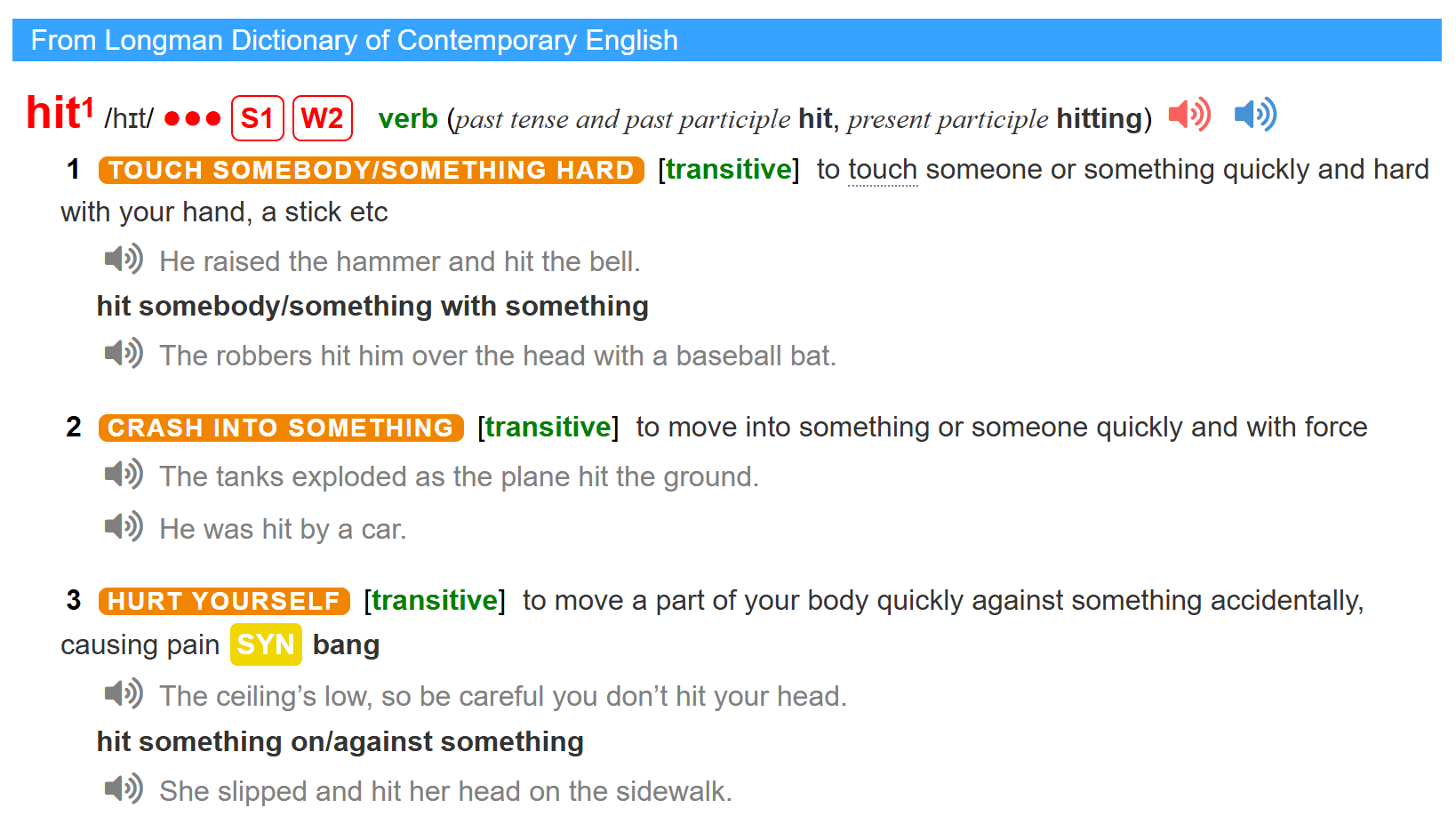
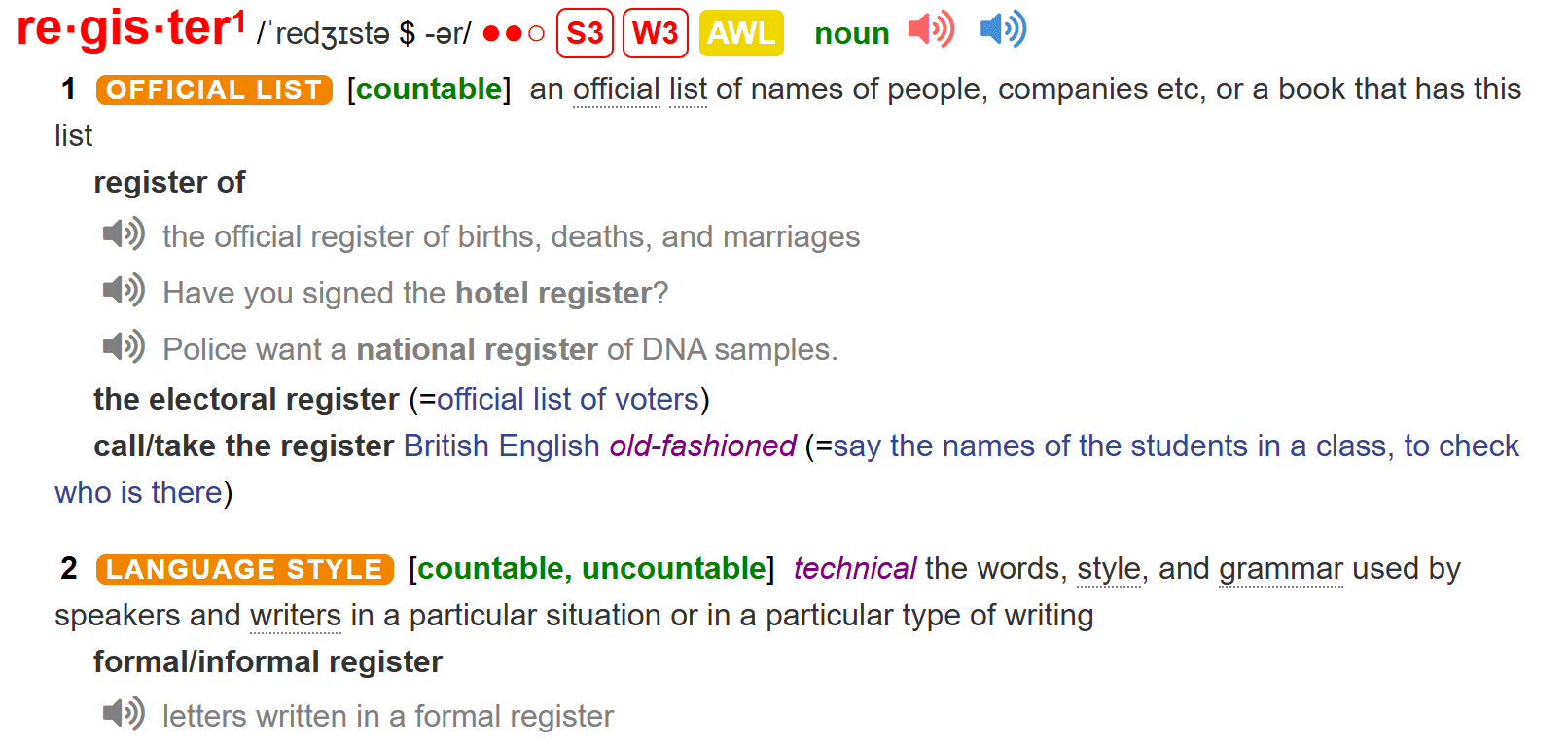
Cambridge uses A1–C2 markers. If a word is marked as S1 or S2, it’s in the most common spoken English — and it almost certainly has meanings and combinations you haven’t learned yet.
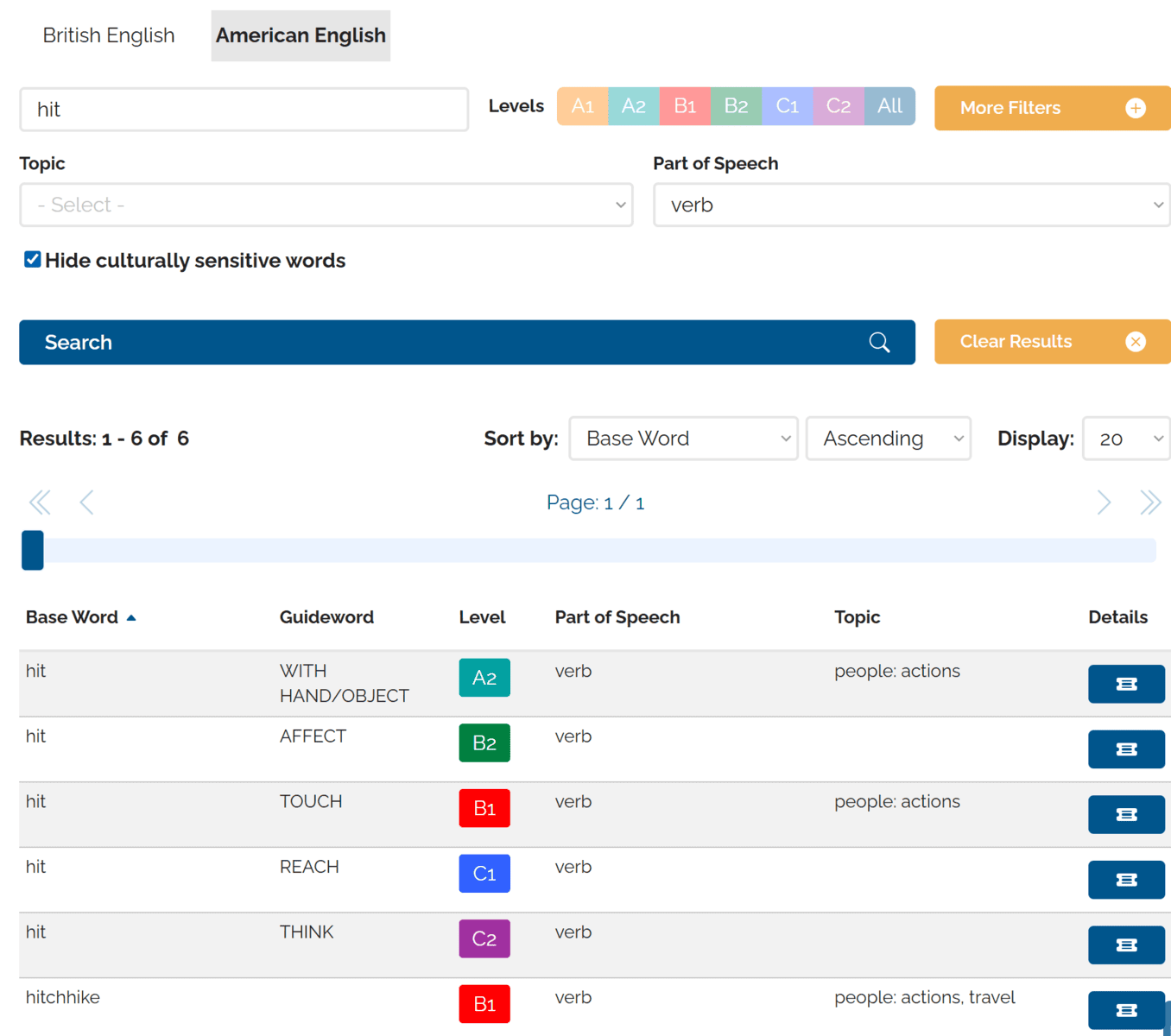
The practical shift: before picking up new vocabulary, look again at the words you use most often. Are you using them in all the ways they actually work? Probably not. That’s where the gap is.
None of these mistakes are about effort. Most learners who feel stuck are putting in real time. The problem is the method — building vocabulary in ways that train recognition but not use.
Recognition is passive. It gets you through reading and listening. Use is what gets you through a conversation.
Related: Turn Passive Vocabulary Into Active: What Actually Makes the Difference
If you want to understand more about how this gap forms — and what actually closes it — I write about it in my newsletter, with specific examples from real lessons.
Sound More Like Yourself in English