A student was telling me about a film she’d watched over the weekend. She said: “The movie calls Oppenheimer.” I knew what she meant. But that’s not quite how it works in English.
Another student, recommending a book: “You should read this — it’s a book named The Alchemist.” Also almost right. But native speakers wouldn’t say it that way.
Two small errors, two different causes. The first is about verb form — “calls” instead of “is called.” The second is about word choice — “named” where “called” belongs. Both are easy to fix once you see why they happen.
“Is called” and the missing verb
“The movie calls Oppenheimer” sounds like the movie is making a phone call.
What the student meant was “the movie is called Oppenheimer” — passive voice, not active.
In Ukrainian, you can say «Фільм називається “Оппенгеймер”» with an active verb.
English uses the passive here: is called, not calls.
So the structure in English is always:
It is called / It was called / a book called (short for “a book that is called”)
When you say “a book called The Alchemist,” the word “called” is doing the same job as “is called” — it’s just a shorter version. Think of it as: “a book [that is] called The Alchemist.” The “that is” disappears, but the meaning stays the same.
In a full sentence, the auxiliary stays visible:
“The book is called The Alchemist.” ✓
“The book called The Alchemist.” ✗ (incomplete sentence)
Getting the right form out in the moment is a separate challenge. If you find that you know words but they don’t come when you need them, this post on turning passive vocabulary into active explains why that happens.
Called or named: what’s the difference
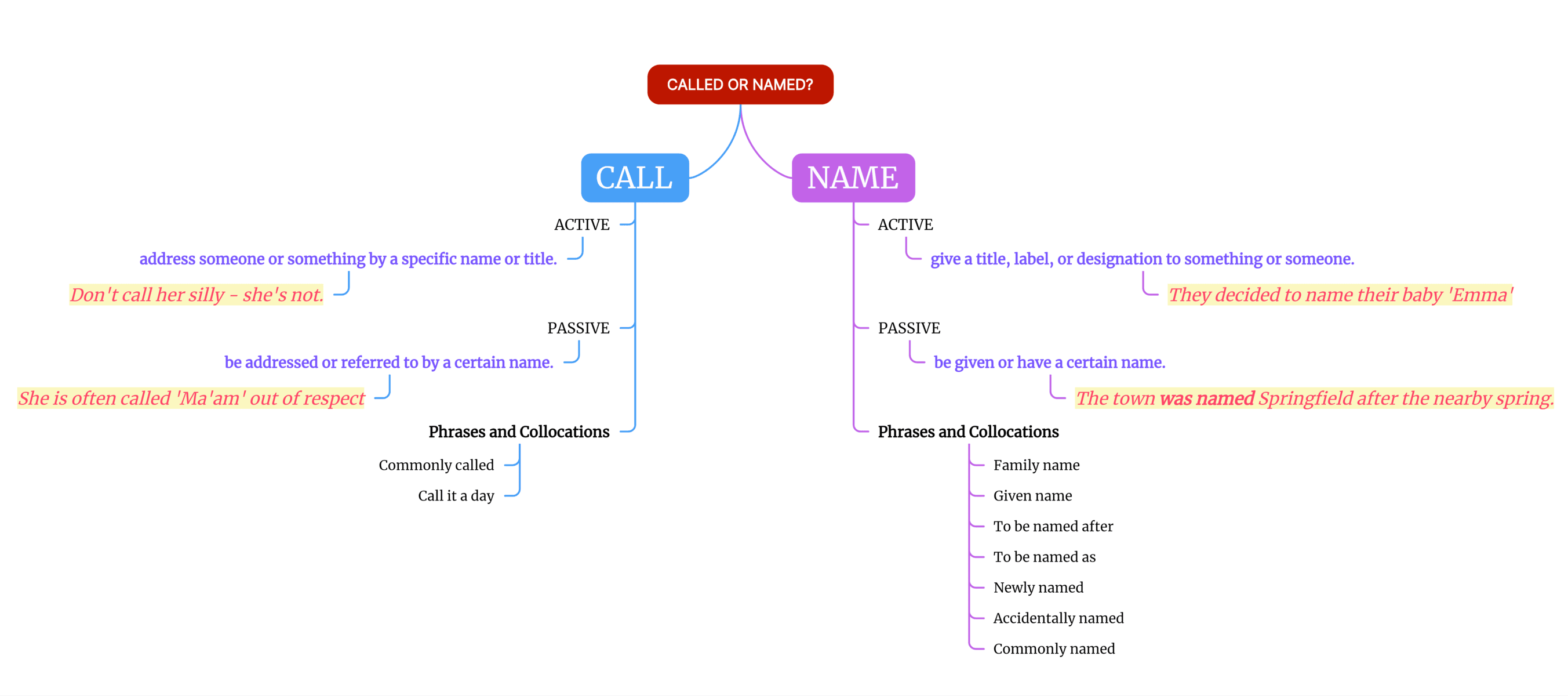
“Called” is the everyday word. It works for almost everything: books, films, cities, dishes, streets, animals, people. When you want to refer to something by its name, “called” is almost always the right choice.
“Named” is more specific. It carries the idea that someone made a deliberate decision to give that name. There’s intention behind it.
That’s why “named” fits people and places well — someone chose that name for a reason — but sounds strange with objects.
“She was named after her grandmother.” (Someone made that choice deliberately.)
“She was called Anna.” (That’s the name she goes by.)
Both sentences work. But they say slightly different things. The first one points to the act of naming. The second one just states the name.
The practical rule: when in doubt, use “called.” It’s almost always correct. Use “named” when the deliberate act of naming is part of what you want to say.
When “named” works and when it doesn’t
“Named” works well when you’re talking about people, cities, or organizations — things that receive an official name at a specific moment.
“The town was named Springfield after the nearby spring.” ✓
“He was named after his grandfather.” ✓
“The company was named after its founder.” ✓
“Named” sounds odd with books, films, dishes, or everyday objects — because nobody ceremonially names a dish.
“A dish named borscht.” ✗ (strange)
“A dish called borscht.” ✓
“A film named Oppenheimer.” ✗ (odd)
“A film called Oppenheimer.” ✓
One more thing worth knowing: “named” is less common in everyday conversation. Even in situations where both words technically work, native speakers reach for “called” more naturally. You’ll hear “named” more in written English, formal contexts, or when the reason behind the name matters to the story.
Examples in context
Here are some sentences you might actually use. Read them out loud — notice how “called” feels neutral and easy, while “named” adds a small weight of intention.
- I’m reading a book called “Tomorrow, and Tomorrow, and Tomorrow.”
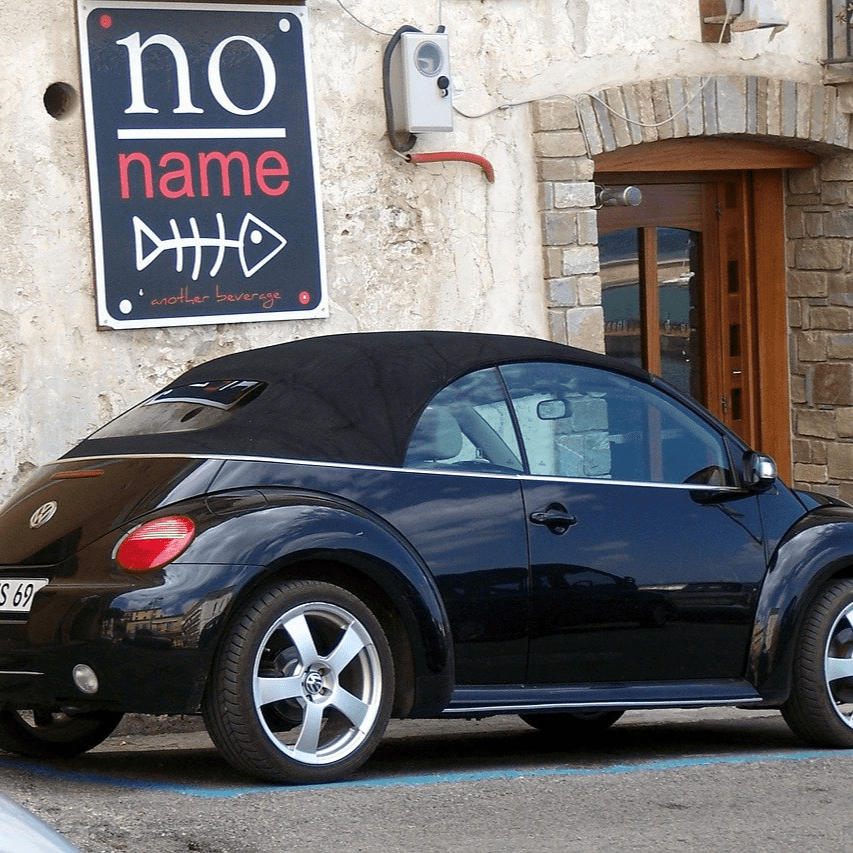
- There’s a café called “Honey” near my office.
- What’s that film called — the one with Cate Blanchett?
- She was named Maria after her aunt.
- The street was named after a poet who lived there in the 1800s.
- What is this called in English? (asking for the word for something)
That last one is worth keeping. “What is this called?” is one of the most useful questions you can ask in English — when you’re looking at something and don’t know the word for it. It’s direct, natural, and works in any situation.
If you want to keep working on specific phrases like these, the same pattern applies to other commonly confused structures — like was supposed to vs had to, which trips up a lot of Ukrainian speakers for similar reasons.
Here’s how “called” and “named” sound in real speech — a few clips from films where characters use them naturally:
You might also notice that in English there are a few more words for giving names to things.
A nickname is an informal name someone gives you (or you give yourself).
A maiden name is a woman’s surname before marriage.
A book or film has a title rather than a name — though “the book is called” is still more natural than “the book’s title is” in conversation.
These are worth knowing, but “called” and “named” will cover most situations.
Practice: flashcards
The best way to make this stick is to say the sentences out loud, not just read them. Use these flashcards to practice choosing between “called” and “named” in complete sentences:
After you finish, try this: think of three things in your life — a place you know, a person, and something you’re reading or watching — and describe each one using “called” or “named.” Say the sentences out loud. That’s one minute of practice that’s worth more than reading this post twice.
If you want to keep noticing real English like this — the small things that don’t make it into textbooks — my newsletter is a good place for that. One short email a week, always about something specific.
Sound More Like Yourself in English